
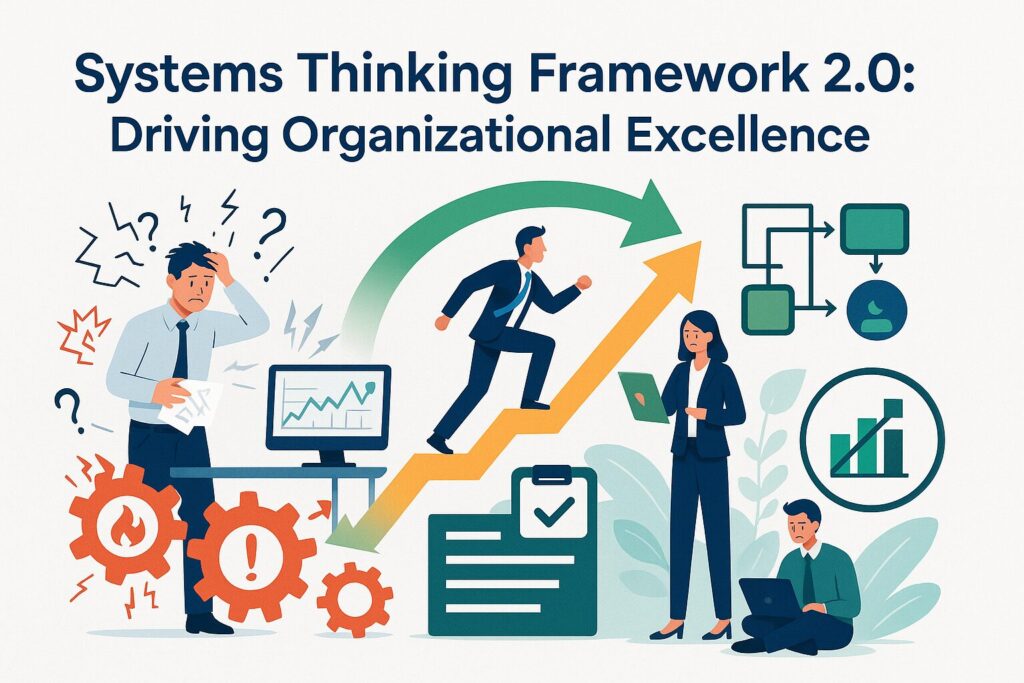
A systems thinking framework is essential for organizations seeking sustainable success in today’s interconnected and rapidly changing environment.
Too often, companies struggle because they focus on isolated improvements rather than addressing the system as a whole. This fragmented approach leads to wasted resources, siloed initiatives, and disappointing results.
The Smarter Solutions Integrated Enterprise Excellence (IEE) methodology provides a Systems Thinking Framework 2.0—a modernized, comprehensive approach that aligns processes, metrics, and decision-making with long-term business objectives.
The Cost of Ignoring Systems Thinking
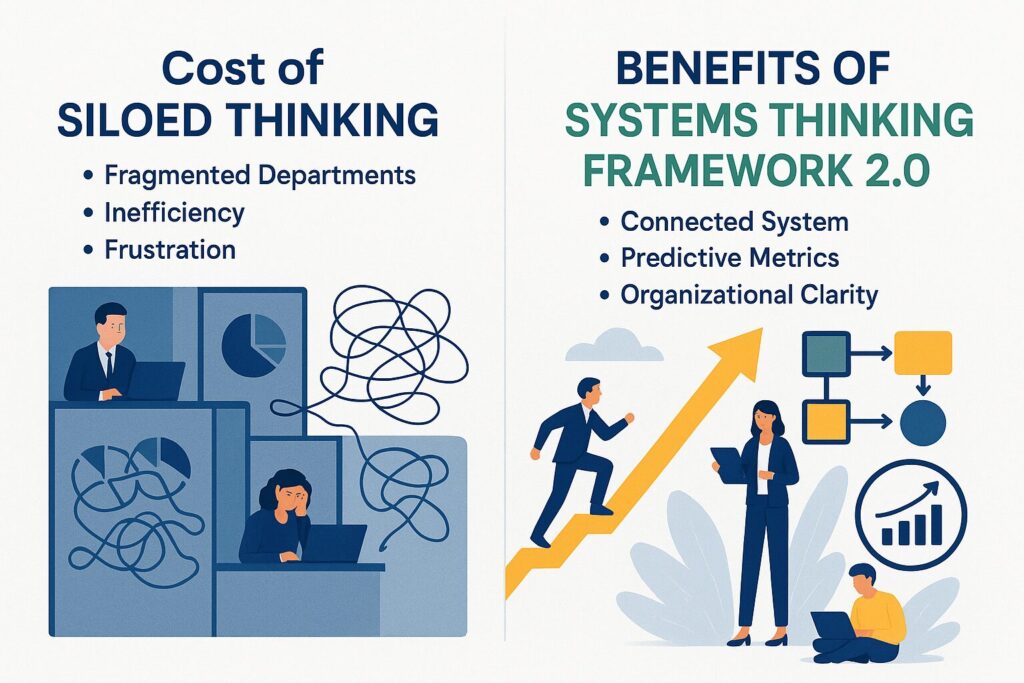
When organizations fail to apply a systems thinking framework, they unknowingly introduce inefficiencies that undermine performance. Leadership may implement improvement projects in silos, creating short-term wins but no lasting financial impact.
Traditional scorecards and dashboards often report metrics in isolation, making it nearly impossible to determine whether initiatives are truly benefiting the enterprise. Without a systems perspective, companies end up playing a constant game of ‘whack-a-mole,’ addressing symptoms rather than root causes.
This results in recurring issues: costly firefighting, missed strategic goals, frustrated employees, and eroded customer confidence. The absence of a holistic framework means leaders operate with blind spots—unable to see how decisions in one area ripple across the entire enterprise.
Why Organizations Need Systems Thinking Framework 2.0
Systems Thinking Framework 2.0 transforms the way organizations approach performance improvement. Rather than chasing short-lived gains, companies can create a structure where metrics, processes, and strategies interconnect to drive sustained results.
Smartersolutions.com’s Integrated Enterprise Excellence (IEE) methodology is designed to make this possible by embedding predictive metrics, process accountability, and enterprise-wide alignment.
Key benefits include:
- A unified view of organizational performance that eliminates silos.
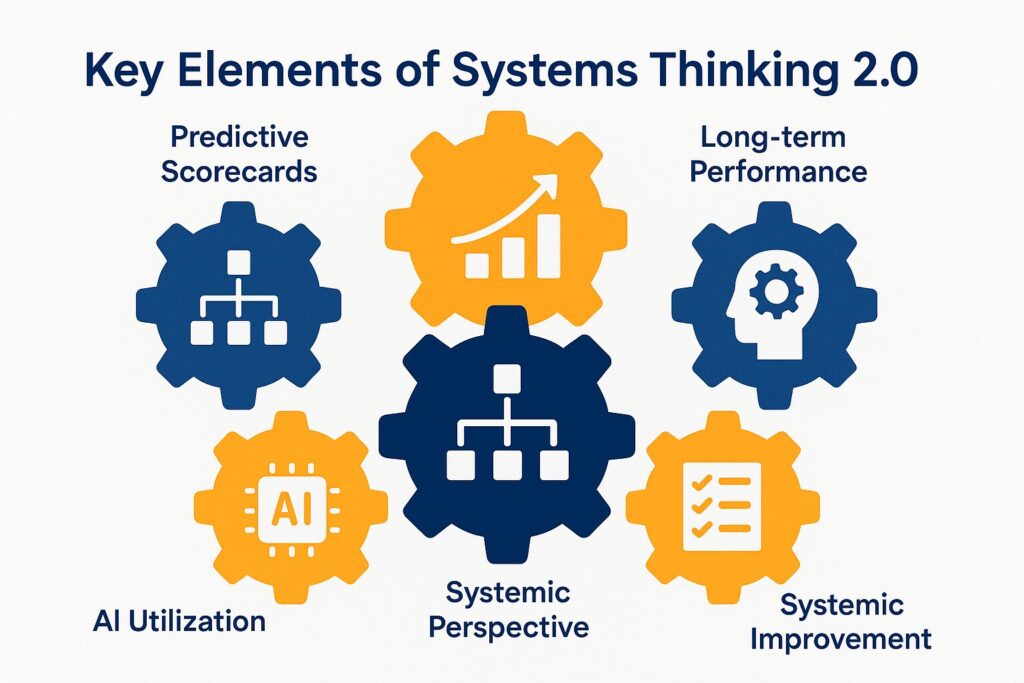
- Predictive scorecarding that links results to processes.
- Data-driven identification of improvement opportunities.
- Stronger alignment between projects and enterprise financial goals.
- Greater resilience to disruption through systemic decision-making.
Systems Thinking Book
The foundation of Systems Thinking Framework 2.0 is detailed in the two-book, novel-style series

These books provide a practical narrative that brings systems thinking concepts to life while demonstrating how the IEE methodology delivers measurable organizational value.
More than theory, this systems thinking book set provides actionable steps for leaders to create a culture of systemic improvement.
Additionally, IEE software is available that enables organizations to securely position the Systems Thinking Framework 2.0 behind their firewalls, ensuring long-term sustainability and protection of proprietary information.
Systems Thinking Model
At the heart of Systems Thinking Framework 2.0 is a systems thinking model that provides predictive scorecard metrics across all levels of an organization. These metrics are not static numbers on a dashboard—they are dynamically linked to the processes that created them.
When a high-level, 30,000-foot-level metric reveals undesirable performance, it signals the need to improve the associated process. This approach ensures accountability and actionable insights, moving beyond traditional after-the-fact reporting.
You can experience this firsthand through a free predictive scorecarding app, which allows you to generate a 30,000-foot-level report using a spreadsheet containing your process output attribute or continuous responses.
By applying this systems thinking model, organizations gain a clear and predictive view of future outcomes, enabling proactive improvement efforts.
Applying Systems Thinking
Applying systems thinking effectively requires more than good intentions; it requires structure and supporting tools.
With Smarter Solutions’ Enterprise Performance Reporting System (EPRS) software, organizations can automate 30,000-foot-level reporting and update results daily across the enterprise.
This creates transparency, accountability, and alignment—empowering teams to see how their efforts directly impact the organization’s success.
Moreover, this framework makes artificial intelligence (AI) far more effective. When AI is applied within a Systems Thinking Framework 2.0, it can identify not only where to improve but also how to prioritize efforts for maximum financial benefit.
This integration is highlighted in a keynote presentation video , which explores how AI combined with IEE creates stronger business outcomes.
Conclusion: The Future of Enterprise Success Lies in Systems Thinking Framework 2.0
Organizations that cling to outdated approaches will continue to struggle with fragmented improvements and stagnant results.
By embracing Systems Thinking Framework 2.0 through the Integrated Enterprise Excellence methodology, leaders gain the ability to transform their businesses into resilient, adaptive, and high-performing enterprises.
This is not about adopting another program of the month—it is about embedding a sustainable, predictive, and systemic framework that drives long-term success.
The pain of ignoring systems thinking is real—but the benefits of applying it through Systems Thinking Framework 2.0 are transformative.
Next Step
If your organization is:
- Tired of reacting to dashboard noise
- Frustrated by inconsistent improvement efforts
- Ready to make data a driver of strategy
- Set to enhance your AI efforts
…then it’s time to explore System Thinking 2.0 with Smarter Solutions.